Why the Ball Is Played Back After a Tackle
Why the ball is played back after a tackle: learn how player positions and breakdown rules make the ball available for the next phase.

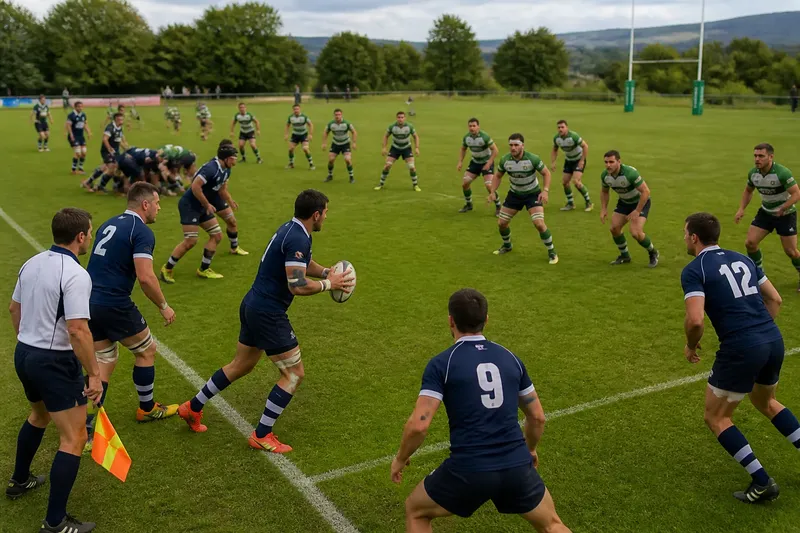
A runner is tackled near the touchline, and a teammate gathers the ball behind the contest. That is why the ball is played back after a tackle: players must approach from their own side, and the next player usually collects it from behind the breakdown. The law does not require a backward pass in every tackle situation.
A tackle begins a short contest called a breakdown. The tackled player must release the ball, the tackler must release the player and move away or regain their feet, and arriving players must follow the entry and contest rules. These duties help make the ball available for the next phase.
Tackle duties
A tackle occurs when a ball carrier is held by an opponent and brought to ground. The tackled player must release the ball promptly. The tackler must release the player and, before playing the ball, move away or get back to their feet. Both players must avoid preventing the ball from becoming available.
Release means letting go of the ball. The tackled player may place, push or pass it, but cannot keep hold after being brought down. The tackler cannot reach for the ball while still on the ground. Other details can depend on the exact sequence, so a close ruling should be checked against the current laws of the competition.
Players who want to compete must enter from behind their own side of the breakdown, through what is often called the gate. Think of the gate as a lane aligned with the tackled player’s end of the field: entering from the side cuts across the contest rather than approaching from behind.
Ruck formation
A ruck forms when at least one player from each team, on their feet, are in physical contact over the ball on the ground. Binding and pushing often happen as players contest position, but simply seeing bodies near a grounded ball does not by itself establish that a ruck has formed. The sequence and players’ positions matter.
Before a ruck forms, a player who is legally on their feet and entitled to play the ball may be able to pick it up. Once a ruck has formed, players generally cannot use their hands to play the ball; they may use their feet, subject to the laws. A player behind the ruck can collect the ball when it has emerged and is available.
The ball often travels toward teammates waiting behind the breakdown, but that is not the same as a rule requiring every pass to go backward. The offside line and each player’s position govern who may play the ball. A pass must still meet the laws that apply to passing; the ball’s movement at the tackle itself is not a command to make a backward pass.
When the ball stays trapped
A ball hidden beneath bodies can become unplayable. The referee considers how the players came to be on the ground and whether anyone prevented a fair contest. Depending on the circumstances, play may stop for a scrum or a penalty; the outcome is not the same in every case.
Say a carrier is tackled on open grass and places the ball on the ground. The tackler rolls clear, and a teammate arrives upright from behind the attacking side, then shields the ball without falling onto it. If the ball remains accessible at the back, a teammate can play it and the attack can continue. If the carrier instead holds it under their chest and it cannot be played, the referee may stop play and award the appropriate restart.
A slow breakdown alone does not tell you that someone has infringed. The ball may be awkwardly placed, or players may need to move clear. Watch for the referee’s signal and whether the ball becomes playable before deciding what caused the stoppage.
Legal entry
An arriving player must enter from behind their own side rather than running in from the touchline. A player who enters from the side can obstruct opponents or gain an unfair advantage, and the referee may award a penalty.
Players contesting the ball must also meet the requirements for staying on their feet and supporting their own weight. Diving onto the ball, collapsing a contest or playing the ball from the ground can lead to a penalty. From the stands, follow one arriving player: note the entry route, whether the player stays upright and what the referee signals.
Imagine a defender sees the ball beside a teammate and steps in from the touchline to grab it. The starting point is a player outside the breakdown’s legal entry lane; the action is an approach from the side. The expected observable result is that the referee may stop play for an infringement, even if the defender touches the ball first. If the defender instead comes from behind the defensive side and meets the other contest requirements, the entry route is legal, though the remaining laws still apply.
Tackler obligations
The tackler may land close to the ball, but must release the tackled player and move away or regain their feet before trying to play it. Reaching from the ground can prevent the attacking team from using the ball and may draw a penalty.
The tackled player has a separate duty to release the ball promptly. If the tackler has released and regained their feet, the tackler may then compete from their own side, provided the other breakdown requirements are met. Being close to the ball does not let either player skip the required actions.
Questions about the breakdown?
Why does the ball move backward?
The next player is often waiting behind the breakdown, so moving the ball back makes it available to that player. The law concerns players’ positions and how they enter the contest; it does not require every pass to travel backward.
Can the tackled player pass the ball?
A tackled player may release the ball by placing it or passing it, but must not keep hold after being brought down. A teammate may collect it if no ruck has formed and that player is otherwise entitled to play it.
When does a ruck form?
A ruck forms when at least one player from each team, on their feet, makes physical contact over the ball on the ground. Once it forms, players generally cannot use their hands to play the ball, though specific law provisions and circumstances matter.
What does a breakdown penalty mean?
It means the referee judged that a player infringed, perhaps by entering from the side, failing to release or playing the ball from the ground. The precise ruling depends on the sequence and the current laws for that competition.
Reading the next phase
When the ball has emerged and is available, a teammate behind the breakdown can pick it up and pass, kick or carry it, subject to the laws. That player may be the scrum-half, but another player can take the ball if properly positioned. Defenders must observe the applicable offside line as the attack reorganizes.
To understand why the ball is played back after a tackle, watch the release, the tackler’s movement and the entry route of arriving players. Then distinguish the ball’s direction from the player’s legal position: the next pass need not travel backward simply because the ball has been brought to a teammate behind the breakdown. For a precise ruling, consult the current laws used in the relevant competition.