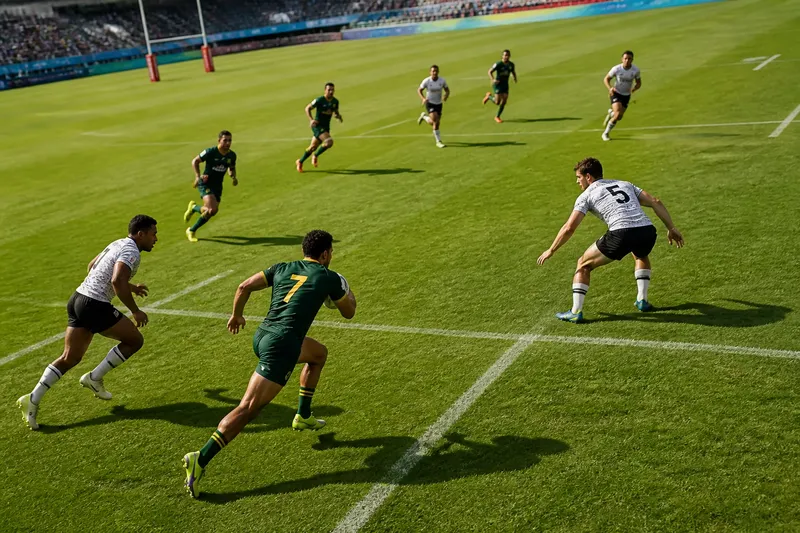
Wide or Narrow: Choosing Where to Attack in Rugby
Rugby’s wide or narrow attack choices make more sense when you track space, support and defensive shape, so you can read why a team shifts or stays tight.
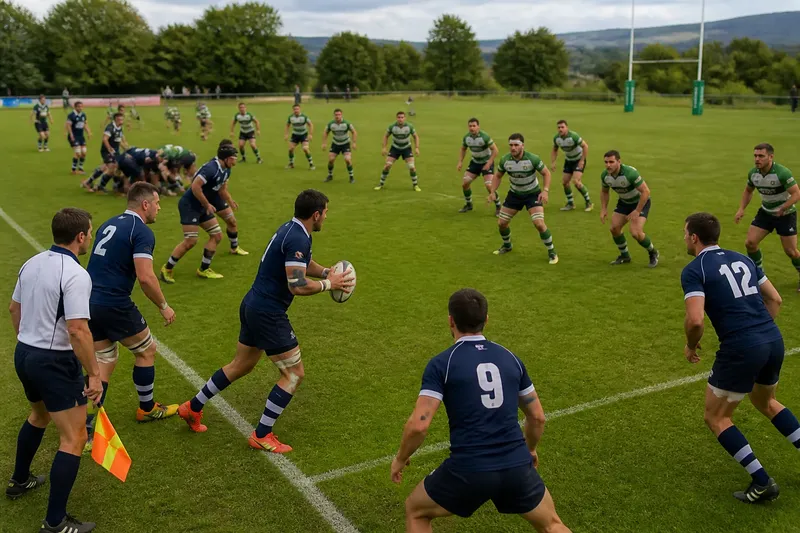
A team gathers the ball near the touchline, and its next pass can point toward open field or back into traffic around the breakdown. Rugby’s wide or narrow attack choices depend on the defenders’ shape, the attackers’ support, and how quickly the ball can reach its target.
Wide or narrow attack
A wide attack moves the ball laterally through several players toward the far side of the field. A narrow attack keeps play in a smaller channel, often with close support runners carrying near the breakdown. These are broad descriptions, not fixed formations: a team can attack narrow for a phase, then send the ball wide, or threaten the edge before coming back inside.
To read the choice, look at three things together: where defenders are standing, how much usable space remains, and which attackers can support the next action. The touchline limits room on one side. The defensive line limits it from the front. A gap between them may be real, or it may close while the ball travels.
A pass across the field can make defenders cover more ground, but it also gives them time to shift. A close carry can keep nearby teammates connected to the next action, but it may run into a dense line. The decision is about which option gives the attack a workable route against the defense’s current shape.
Space and timing
Space is not simply an empty patch of grass. It is room an attacker can reach before a defender covers it. The farther the ball travels sideways, the more opportunity the defense has to slide across. A broad-looking gap can shrink during the pass, especially if the attack is slow to organize or receivers stand flat and wait.
Going wide may suit a defense that is bunched near the breakdown, has been drawn inward, or has outside defenders slow to reset. The attack still needs accurate handling and enough time to use that room. If the pass chain is awkward or receivers are isolated, the ball may reach the edge with little support and no safe next action.
A narrow attack may be useful when defenders have spread out to guard the width. A short carry or pass near the breakdown can challenge the inside shoulder of a defender covering a larger area. But if defenders are already packed close, another carry into that congestion may bring pressure without opening a useful route.
Support and alignment
Support is the nearby help that lets a carrier keep the attack alive. It may come from a teammate close enough to contest for the ball after contact, or from a runner positioned to receive a pass before the defense closes. The right option depends partly on where that help already is, not only on where open grass appears to be.
When several attackers are close to the ball, a narrow carry may let them arrive quickly and maintain continuity. If those players are already spread across the field, a wide pass may connect with runners who have room to move. Either way, a pass should lead into usable space. A teammate beyond the ball but cut off from support may be a poor target.
Think of the attack like a garden hose being redirected: water follows the route that remains open, while a bend can slow the flow. In rugby, moving the ball or drawing defenders toward one channel can change which route is available next. The attack must still have players in position to use it.
Say a team has the ball just inside the right half of the field. Several defenders are close together around the middle; two attacking backs are already wide, and a supporting runner is moving toward them. The attack has a pass available before the defense resets. In this invented situation, the concrete choice is to pass wide: the receivers have support, and the defenders must turn and cover them. If the far-side backs were isolated, the choice would change to a close carry with nearby support; the expected result would be a carrier with teammates close enough to help, rather than a pass that leaves the receiver alone.
Defensive shape and tradeoffs
A defense is a connected line, but its players may press forward, hold, drift outward, or guard the space near the breakdown. Those differences can influence where an attack goes. A narrow attack may challenge the connection between defenders; a wide attack may test whether outside defenders can move across without leaving an inside gap.
Watch how the defense reacts after each phase. If it repeatedly folds inward to protect close carries, space may appear farther out. If it spreads early to prevent passes to the edge, a narrow attack may encounter fewer defenders nearby. Treat this as a pattern to observe, not a promise: defenders can adjust, and the shape may change before the next pass.
The touchline also matters. Going wide can put a runner near the boundary, reducing room to change direction or recover a loose ball. Staying narrow preserves options on both sides, but gives the defense a smaller area to cover and may leave the attack facing a tightly grouped line.
Choosing an attack route
- Check whether defenders are bunched near the breakdown. If they are, pass wide only if outside receivers have support; otherwise, carry close and keep teammates nearby.
- Check whether defenders have spread across the field. If they have, carry or pass narrow into a channel with close support; if the inside is crowded too, shift the ball to the edge instead.
- Check whether the outside receivers are moving and available before the defense resets. If they are, pass wide; if they are standing still or isolated, hold the ball and use a supported close option.
- Check whether the next receiver can act before defenders arrive. If there is time and a clear route, continue the pass chain; if not, choose a short carry with nearby support.
- Check how close the intended route is to the touchline. If there is room to keep the move alive, use the outside channel; if the boundary leaves little room, attack inside with support.
- Check where the attacking support runners are positioned. If they can reach the likely contact point or receive the pass, choose that route; if they cannot, keep the ball with a carrier who has nearby help.
Questions about attack choices?
When should a team attack wide?
A wide move can suit a defense that has compressed near the ball, provided outside attackers have support and time to receive. It is less attractive if the ball is likely to arrive late, the receivers are stationary, or the touchline leaves little room to continue.
When is a narrow attack useful?
A narrow attack can suit a defense that has spread to cover the width, especially when close support is available. If defenders are already packed into the channel, the attack can use a close carry to draw them in before shifting the ball outward.
Does wide always mean a longer pass?
No. A team can move the ball wide through a sequence of short passes, and a long pass can travel inward. “Wide” describes the direction and area of attack, not a particular pass length.
Can a team change direction mid-attack?
Yes. A team may threaten one channel, then pass back inside or shift outward as the defense responds. The change makes sense when receivers and support runners are ready to use the space that opens.
Read the next phase
As a viewer, follow the defensive response rather than only the ball. Notice whether defenders move inward or outward, whether attacking support stays close, and whether the next receiver has room to act. These details explain why a team may remain narrow even when the far side looks open, or continue wide after the defense begins to drift that way.
Also watch what happens after a carry is stopped. If defenders have gathered around the carrier, the next phase may have a different balance of space. If the defense remains connected and the attack has lost its support runners, changing direction may leave the next receiver under pressure. Similar field positions can call for different choices because the defense and support have changed.
To read rugby’s wide or narrow attack choices, track the space defenders leave, the support attackers can bring, and how the defensive line adjusts. A useful clue is often the route the defense has had to abandon to handle the current phase.